
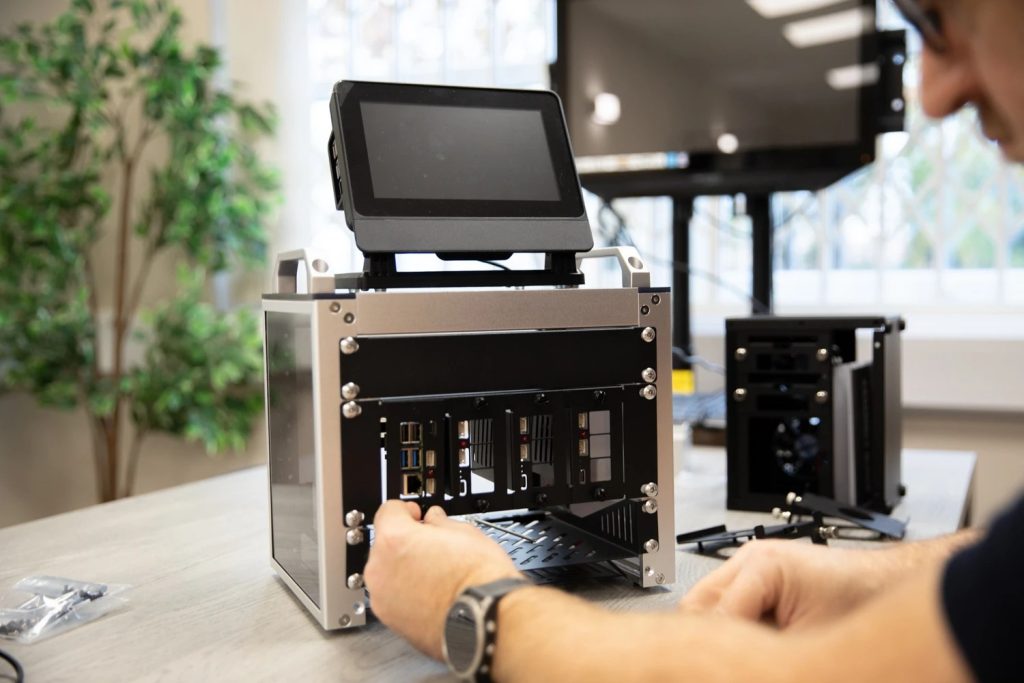
The world of business is going through a paradigm shift which speed, flexibility, and efficiency aren’t optional, but are necessary. The traditional infrastructure is often slow and expensive to modify and struggle to keep pace with the demands of the requirements of distributed operations and real-time insights. ScalerPi offers a fresh look on edge computing, combining it with practical engineering in order to deliver solutions that can be truely scalable.
At the core of this revolution is industrial automation through Raspberry Pi, which enables companies to think differently about how they develop and manage their systems. Business can now use lightweight, powerful devices to replace heavy, centrally-located hardware. This approach reduces time to market and allows teams the ability to react immediately to the changing environment.
Data-driven Action at the Edge
Edge computing is an effective tool that allows data to be handled locally. In the absence of cloud-based solutions, waiting for them to perform in various industrial settings isn’t practical. ScalerPi can provide an infrastructure that is independent, but can be integrated with other systems if needed.
The industrial Raspberry Pi IoT Gateway is the most important component of this system, as it functions as a central interface for devices and applications. It allows seamless communication between sensors, software, and machinery platforms. It’s possible to monitor the operations in real-time, spot problems in the early stages and ensure consistency across different locations.
For industries like logistics and monitoring of environmental conditions, this technology is transformative. Systems are able to function in areas that have low connectivity or in remote areas making sure that data and operations remain accessible.
Compact Power for Demanding Environments
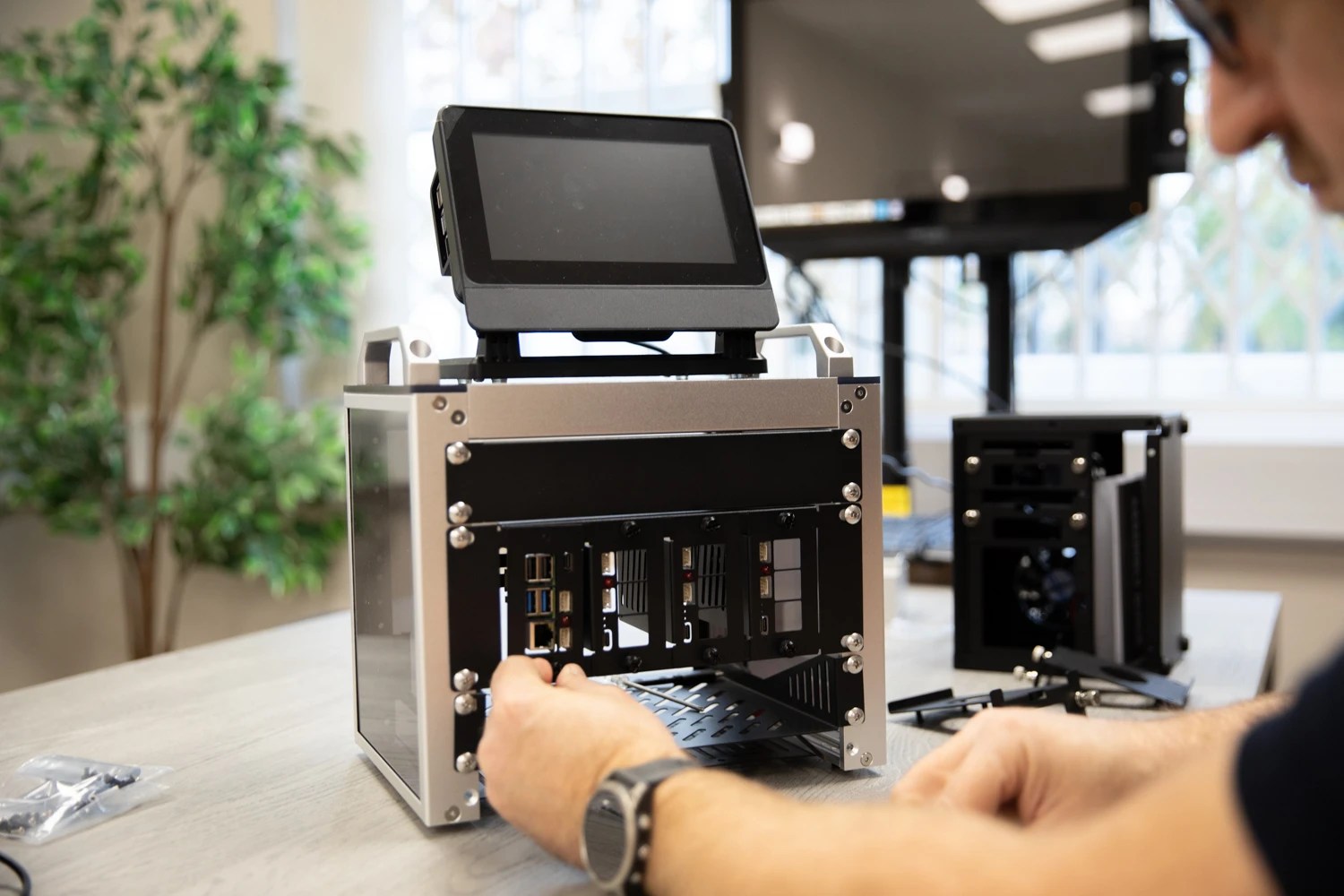
In the field of industrial computing, balancing performance and practicality is among the toughest tasks. Large servers can provide performance, but they also come with high costs, energy consumption, and restricted flexibility. ScalerPi offers industrial Raspberry Pi servers which deliver solid computing and a compact and energy-efficient design.
These servers are designed to work in real-world settings where space and power are at a minimum. They can be utilized in a manufacturing facility or retail outlet, and also as remote monitoring stations. Modularity enables businesses to expand their systems slowly, based on the actual needs.
Taking this a step further, the compact industrial Raspberry Pi compute module server offers even greater versatility. These servers are built to withstand harsh conditions and offer advanced processing along with endurance. They are perfect for applications requiring continuous operation like smart cities and industrial automation systems.
Flexible Deployment Using Containerized Delivery
Containerization is a crucial aspect of modern infrastructure. ScalerPi incorporates Raspberry Pi Docker to provide flexible and efficient applications management. Docker lets businesses build, update and scale applications swiftly without interrupting current operations.
This approach simplifies development and ensures consistency across different deployments. The software can be evaluated and then seamlessly transferred to another environment, reducing errors and improving reliability. This level of control that is vital for businesses with multiple locations, is very valuable.
Containerization is also a tool for development. Teams can try out new services or features without impacting existing systems, which makes it easier to keep up with the competition in industries.
Practical Solutions in a Variety of Industries
ScalerPi is a powerful instrument because it can adapt to a wide range of industries. In manufacturing industrial automation, Raspberry Pi provides predictive maintenance, which reduces the time of breakdown and boost efficiency. The machines can connect and exchange information to create a unified and intelligent system.
In the field of agriculture, edge technologies aid in implementing smarter farming methods. Sensors track the weather patterns, soil conditions and the health of crops. This allows farmers to make informed choices that increase yields while conserving resources.
The hospitality and retail sectors profit from real-time data on the behavior of customers. Companies can enhance their operations and improve customer service. From digital signage and queue management to digital signage, businesses can use it to improve customer service. Public sector initiatives like smart cities depend on cutting-edge technology to perform tasks such as environmental monitoring and asset tracking.
Interconnecting Hardware and Cloud securely
What distinguishes ScalerPi is its ability to bridge the gap between physical devices and cloud-based systems. Combining hands-on hardware experience with modern cloud practices makes a platform that can support local processing as well as centralized management.
This ensures businesses can grow without adding more complexity. The infrastructure is manageable, cost-effective and secure no matter if you begin with a smaller installation, or grow to thousands of devices. Transparent pricing, modular design and user-friendly simplify the process of deployment. This enables organizations to focus on innovation and not operations-related issues.
Industrial Technology: A Future-Ready Methodology
The need for a scalable and flexible infrastructure will only increase as industries develop. ScalerPi can be a solution which meets these needs by combining edge computing power along with Raspberry Pi technology.
From the industrial Raspberry Pi servers to advanced IoT gateways and containerized software Every component is created with scalability, real-world useability and scalability in the back of our minds. The infrastructure is designed to not just support today’s requirements, but make sure that businesses are prepared for the future.